And time away from the screen
Giving students a break in between subjects is essential. I’m a big fan of the Pomodoro Technique —working in 25-minute sprints followed by a 5-minute break (or maybe 10). If you’re not familiar with this technique, the link can provide a much more in-depth explanation.
With devices in the classroom for almost every lesson, it’s tempting to just let students stay on them and play games during breaks. It keeps them busy and can also give you a bit of a break. However it also leads to more screen time, and possible issues with inappropriate games or sites.
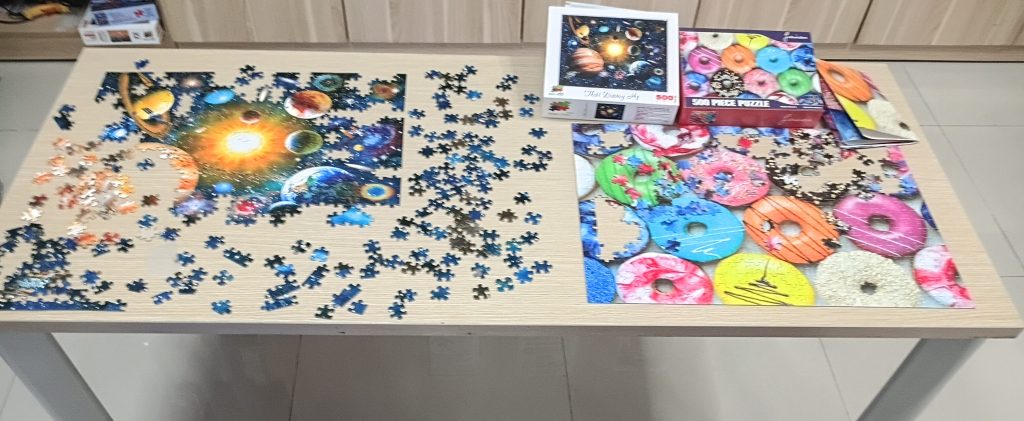
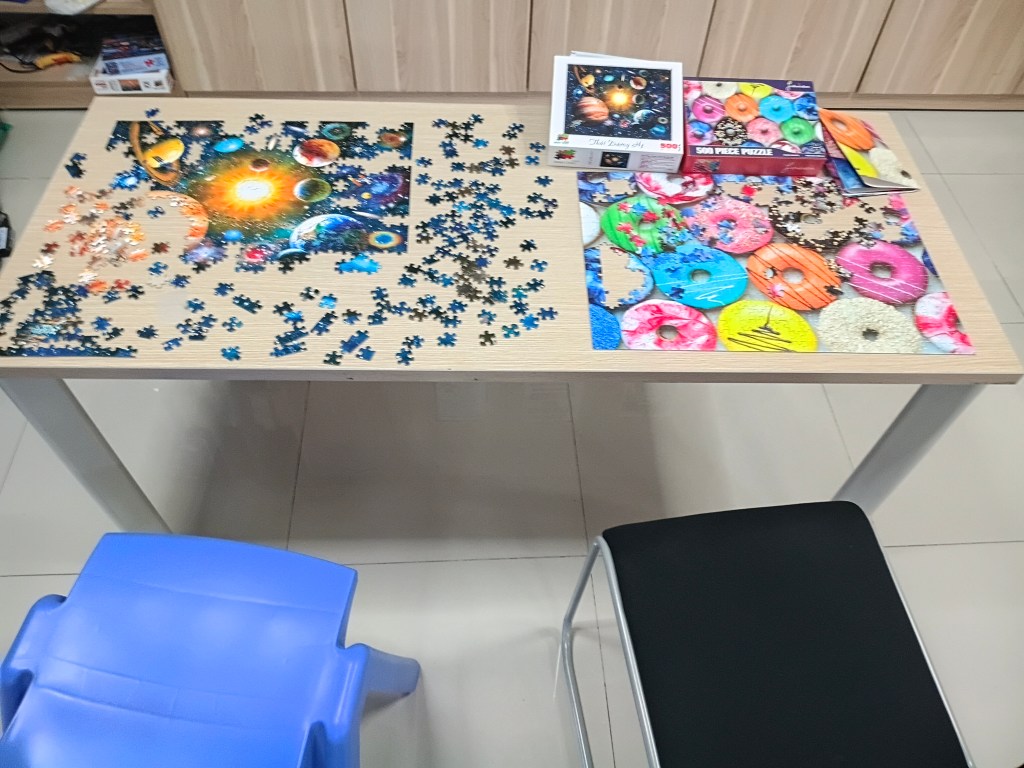
With the budget I had for my classroom at the start of the year, I decided to take an “old school” route and order some puzzles for brain beaks and free time. I was amazed at the level of interest a simple 500-piece puzzle generated. Some days it’s hard to get them back in their seats to continue the lesson, especially with the donuts puzzle (see image below). This is the class favorite so far.
Here are a few tips I learned this year if you are interested in trying this:
- Puzzle Size: For 10 and 11-year-olds, 500 – 1,000 pieces is a good range. Anything more and they lose interest.
- Table Space: You’ll need a good-sized table. With smaller puzzles, you can usually fit two on there so more kids can join in.
- The Budget Hack: If money is an issue, I found success with putting an email out to staff and parents asking if they have any old puzzles donate.
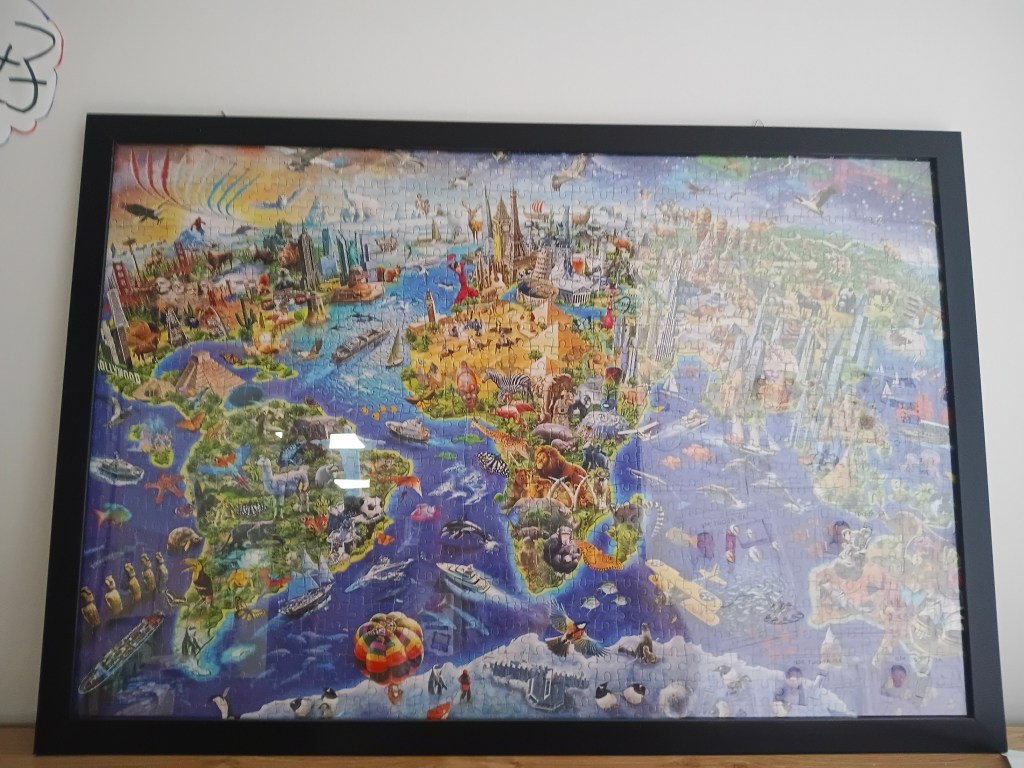
- Decorating the Classroom/Hallways: As you can see in one of the images below, we were also able to purchase some frames for completed puzzles. We plan on hanging them around around the classroom and in the hallway.
I wasn’t sure how this would go over at the start of the year, but it turned out to be a great decision and money well spent. I hope you get a chance to try it in your room!


Leave a comment